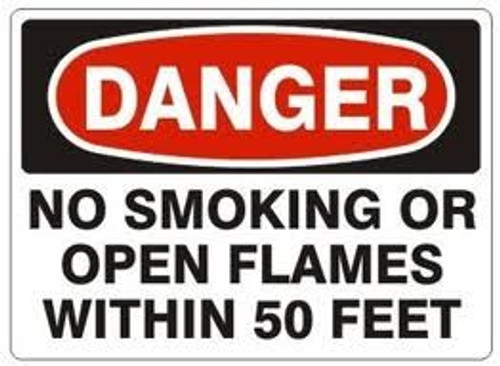
Clearly communicate fire- and ignition-risk restrictions with Danger No Smoking or Open Flames Within 50 Feet signs from Ideal Blasting Supply. These OSHA-style danger signs help enforce safety protocols in blasting areas, industrial sites, construction zones, fuel storage areas, and other hazardous environments where smoking and open flames are prohibited within 50 feet.
OSHA-style Danger Messaging: Bold “No Smoking or Open Flames Within 50 Feet” legend for immediate hazard recognition.
Multiple Sizes & Formats: Choose rigid aluminum for permanent outdoor use or adhesive vinyl (VPO) for temporary/portable installations.
Durable Construction: Aluminum signs with baked enamel resist weather and corrosion for long service life.
Flexible Mounting: Aluminum signs mount with hardware; VPO stickers stick to smooth surfaces or sign stands.
Legend & Messaging:
NO SMOKING OR OPEN FLAMES WITHIN 50 FEET — a clear safety restriction that helps minimize fire and ignition risks.
Material Characteristics:
Aluminum: Weather-resistant rigid substrate with baked enamel paint for long outdoor life.
Vinyl (VPO): Adhesive backing for peel-and-stick application to clean, smooth surfaces or sign stand panels.
Mounting:
Aluminum signs: Mount using screws, rivets, zip ties, or adhesives as needed.
Vinyl stickers: Peel and stick — ideal for sign stands, temporary safety barriers, or smooth surfaces.
Blasting and demolition sites
Construction and industrial zones with fire risks
Fueling stations, storage yards, and flammable material areas
Portable or permanent hazard marking solutions
Posting Danger No Smoking or Open Flames Within 50 Feet signs helps proactively reduce ignition hazards, making work areas safer by clearly communicating where smoking and open flames are restricted — especially where combustible materials or processes are present.